


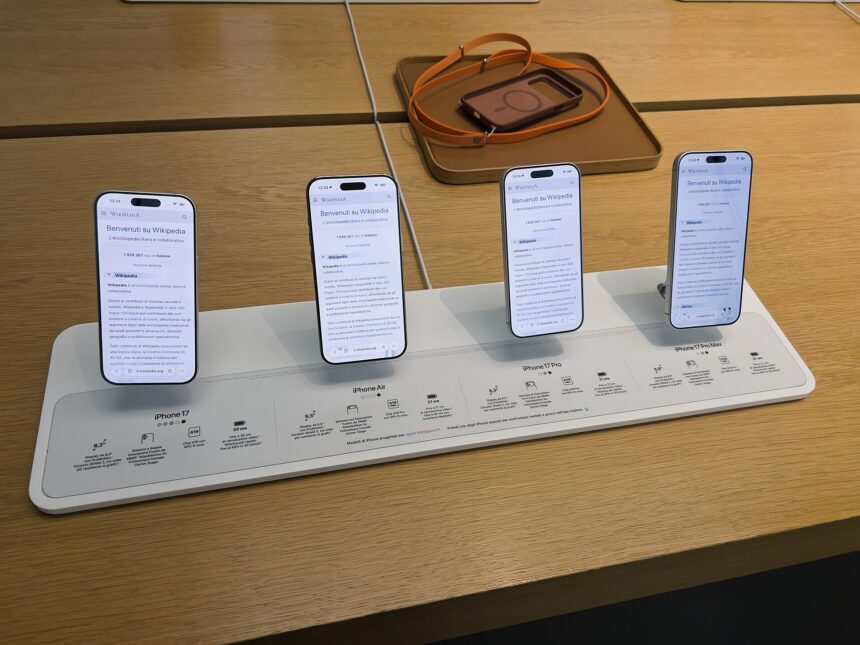
For as long as most people have been buying iPhones, there has been one reliable way to save money: wait for the new model, then buy last year’s for $100 less. Apple ended that this month. On September 9, the day it announced the iPhone 18 Pro, Apple raised the price of every iPhone it sells by at least $100. The year-old iPhone 17 went from $799 to $899. The iPhone 16, now two years old, went from $699 to $799.
The official explanation is memory. The more interesting explanation is the phone Apple didn’t launch.
The cost story is real
Start with the part nobody disputes. Memory chips have become dramatically more expensive as AI data centers buy up supply, a squeeze we covered last week. Apple had already raised Mac and iPad prices in June, and on its July earnings call Tim Cook said Apple had “reluctantly raised prices,” describing the market as a “100-year flood on memory pricing.”
The September price list bears that out in its details. The base prices rose $100 across the board, but the biggest jumps came in the storage tiers, where the memory actually is. According to Macworld’s breakdown, the 1TB iPhone 18 Pro costs $300 more than the 1TB iPhone 17 Pro did, and the 2TB Pro Max is up $500. If Apple were simply using memory as cover for a margin grab, you would not expect the increases to track memory content this closely.
The calendar story is bigger
But a price increase is only half of a pricing strategy. The other half is what buyers can choose instead, and here Apple had already made a decision months earlier. The standard iPhone 18 is not coming until spring 2027. Apple supplier Pegatron confirmed the split launch on its August earnings call, and Apple’s September announcement covered only the iPhone 18 Pro, at $1,199, and the Pro Max, at $1,299.
Bloomberg’s Mark Gurman reported the plan months ahead of the launch:
Apple will launch the iPhone 18 Pro, 18 Pro Max and Foldable next fall – with the iPhone Air 2 never – at least not in recent months – planned for 2026. https://t.co/qVbKHjJH3N
— Mark Gurman (@markgurman) November 16, 2025
Put those two decisions together and look at it from the buyer’s side. In the holiday quarter, when Apple sells the most phones, the cheapest new iPhone 18 costs $1,199. The alternative is a year-old phone that now costs $100 more than it did last week. For anyone who wants the new thing, there is no new thing at $799 this fall.
The early evidence suggests that is steering people upward. Counterpoint Research found that iPhone 18 Pro sales in China rose 12 percent year over year in launch week, in a Chinese market where overall phone sales were down 17 percent from the same week last year. Counterpoint analyst Ivan Lam said the delayed standard model may have encouraged buyers to upgrade to Pro models. That builds on a trend that was already running: CIRP found that the average U.S. iPhone sold for $1,042 in the March quarter, a record for that period, as sales shifted toward the most expensive models.
The case that this is just good product planning
There is a fair case that the split launch has nothing to do with squeezing buyers. The reasons Pegatron cited include closing a marketing gap with Chinese rivals that launch flagships in the first half of the year, and keeping a lineup that is growing toward six models from crowding a single September event. Both make sense on their own. A spring iPhone 18 gives Apple a second big launch moment every year, and the base model will arrive with whatever memory prices look like in 2027 rather than at today’s peak.
And Apple’s margins are not untouched. Cook’s own description of the memory market, and the decision to raise prices on Macs and iPads first, suggests a company protecting its margins rather than expanding them.
Still, intent matters less than effect. Whatever the reason for moving the standard iPhone 18 to spring, the result this fall is the same: Apple raised prices at the exact moment it removed the cheapest new option, and it did so in its first iPhone launch since John Ternus succeeded Cook as CEO on September 1. The memory shortage explains why prices went up. The calendar explains why so many buyers will pay them.
What to watch in the spring
The real test comes when the standard iPhone 18 arrives. If it launches at $799, the split was mostly about timing and marketing, and this fall’s prices were a temporary toll. If it launches at $899 or higher, the iPhone 17’s new price was a preview, and the $799 iPhone is gone for good. For anyone deciding what to buy before then, the old rule has flipped: last year’s iPhone is no longer the bargain it used to be, and waiting for spring may be the cheaper move.
Related reading: Memory Prices Are on Track to Rise 400%. Your Next Phone Is Paying for AI. · Google’s $899 Googlebook Isn’t a Chromebook Successor.