


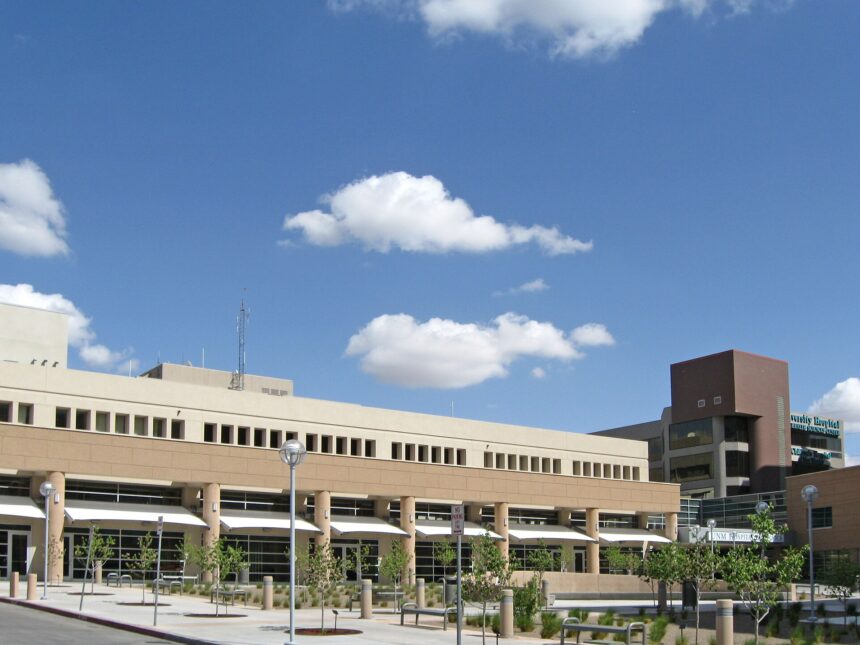
For about two hours on Monday, October 26, ambulances in New Mexico were sent to other hospitals instead of UNM Health’s main hospital in Albuquerque. The health system runs the state’s only burn unit, its only children’s hospital and its only Level 1 trauma center, The Record reported. A cyberattack had forced UNM Health to limit admissions, divert ambulances and suspend outpatient surgeries and appointments for the rest of the day.
A day later, the group claiming the attack, a new outfit called BYOD, posted an unusual offer: free decryption keys for the hospital’s locked machines, and up to $2,500 for each affected patient, BleepingComputer reported. It also said it would keep the data it claims to have stolen.
The offer got the headlines. I think it is the least important part of this story, and the most misleading. The “apology” is a pressure tactic aimed at patients, not a change of heart. The real lesson is about concentration: when one health system holds a state’s only top-tier trauma care, a two-hour computer outage stops being an IT incident and becomes a statewide emergency-care problem.
What happened
The intrusion was detected around 11:30 a.m. that Monday, and about 40 minutes later staff were told to shut down and unplug their computers and turn off Wi-Fi on mobile devices, according to Help Net Security. UNM Health said it brought in outside partners and notified state and federal law enforcement. Appointments at more than 30 clinics were canceled and patients were told to stay home and call 911 in an emergency, DataBreach.com reported. Classes at the medical, nursing, pharmacy and population health schools were canceled through Tuesday.
Recovery was fast. By Tuesday, UNM said critical systems were back online, every UNM Health hospital was fully open and ambulance traffic was normal. Its assessment was that the event affected some end-user devices but “did not penetrate core systems or servers,” per BleepingComputer.
BYOD tells a very different story. On its leak site, the group claimed it compromised 36,000 machines across both the campus and hospital networks, including the university’s Microsoft Entra tenant and two Oracle databases, and that it took Social Security numbers, payroll and student records and patient information. None of that has been verified. UNM says it is waiting on a forensic analysis to learn whether patient data was taken, and that it “did not make concessions with any group behind the threat,” DataBreach.com reported.
Why the apology is part of the attack
BYOD’s follow-up post said it had not known the hospital was running machines used for real-time patient care, and offered keys only for the hospital side, not the main campus. “We have morals and we have a heart, we are not villains,” the group wrote. To collect the $2,500, patients would have to send the group “proof” they were affected.
Look at what that does. It opens a direct line between the attackers and the people whose records they claim to hold, and it creates public pressure on the hospital to engage. UNM’s answer was to warn the public not to deal with anyone claiming responsibility and to report contacts to the FBI.
UNM Health Sciences posted its warning on X:
Following a cybersecurity incident, those responsible may attempt to exploit public concern through additional scams, including false offers of payments or compensation. pic.twitter.com/0nfSoRj3UB
— UNM Health Sciences (@UNMHSC) October 28, 2026
My take: “we are not villains” is extortion with better marketing. A group that keeps the data has not undone the harm. It has only postponed deciding what to do with it.
The case that UNM’s defenses worked
There is a strong argument that this is a story about a hospital doing things right. Staff were told to disconnect within roughly 40 minutes of detection. Hospitals reopened the same day, clinics were back on schedule the next, and UNM says its core systems were never breached. If the forensic review confirms that account, a same-day reopening is a good outcome by any measure, and evidence that network segmentation and incident drills did their job.
That is fair, and UNM deserves credit if it holds up. But the length of the outage is not the only measure of risk. During those hours, the most seriously injured patients in New Mexico had no in-state Level 1 trauma center to go to. And this is not an isolated event: The Record notes it is the second major cyberattack on a large state hospital this year, after the University of Mississippi Medical Center.
I’d argue states that depend on a single top-tier trauma center should plan for its computers failing the same way they plan for its power failing: diversion agreements, paper workflows and drills that assume the network is what went down. A health system that serves more than a million patient visits a year, as Infosecurity Magazine put UNM’s count, is regional infrastructure whether or not anyone labels it that way.
What to watch
First, the forensic results. UNM spokesperson Chris Ramirez said the system will know whether patient data was compromised after it completes “a very thorough forensic analysis.” Second, notices: as of October 29 there was no official breach notice or regulatory filing, and a law firm had already opened an investigation into possible class claims, according to DataBreach.com. Third, BYOD itself, whose leak site was unreachable by that Thursday and which had not posted UNM data.
What I’ll be watching most is whether the “pay the patients” pitch spreads. If it gets attackers a channel to victims and a softer headline, other groups will copy it, and hospitals will need a plan for that conversation too.
Related reading: Hackers reached school employees’ SSNs through a vendor’s vendor · 153 million driver’s licenses leaked from an age-check company · PHP2Shell and the patch gap