


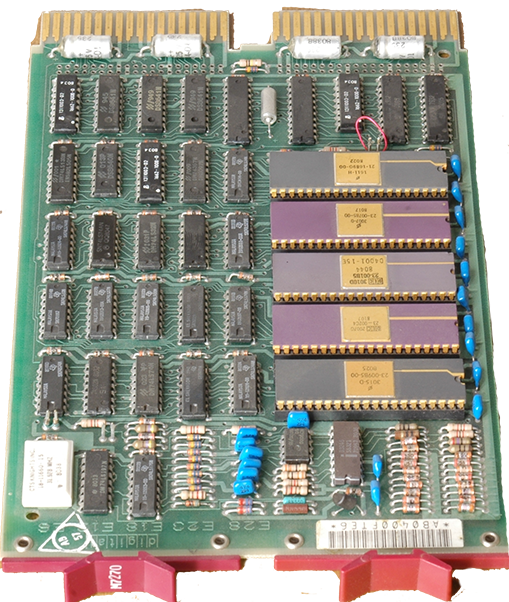
 An odd notion that hardware no longer matters has lately taken hold in the world of tech commentary. For example, in a well-argued piece explaining his decision not to attend the Consumer Electronics Show, Buzzfeed’s Matt Buchanan writes:
[S]oftware and services have become the soul of consumer technology. Hardware (seriously doesn’t the word “electronics” in the conference’s dusty title make your eyes instantly droop a bit?) has become increasingly commoditized into blank vessels that do little more than hold Facebook and Twitter and the App Store and Android and iOS. And the best and most interesting vessels, increasingly, are made by the very companies making the software.
It’s true that the relationship between software and hardware is changing, but this is happening in much more complicated and interesting ways. If hardware were a pure commodity, sales of phones, tablets, and PCs would behave the way commodity markets do, with all business flowing to the lowest cost and no-name Chinese manufactures of good enough handsets, tablets, and PCs dominating even in advanced economies. Instead, the premium producers, especially Apple and Samsung, are winning. (Samsung makes lots of low-end phones, but it is enjoying its greatest success with its top-of-the-line products.)
What is happening is that hardware and software are becoming more and more integrated, to the point where it is difficult to tell where one ends and the other begins. This integration is at the heart of Apple’s success and the need for it is driving Google and Microsoft into the hardware business and may push Samsung to break with Google’s control of Android or to develop an alternative to it.
The integration of hardware and software also makes the meme started by Google’s Eric Schmidt and repeated by many others, that the only companies that really matter to consumers are Apple, Amazon, Google, and Facebook. Of these four, only Apple comes anywhere close to full vertical integration. All of them depend on a sprawling infrastructure of companies, including Intel, Qualcomm, Nvidia, and ARM Holdings, that design the non-commoditized components on which everything else depends. These companies, as it happens, were very well represented at CES.
Tech is a complicated business. But the tech commentariat is hopelessly addicted to simpleminded generalities. The consumers of punditry would be better served if we all stopped to think a bit more.