


Peter Bright at Ars Technica has a feature about his frustrating search for a Windows notebook that can match the MacBook Air–and how difficult it will be for Intel to pull off its quest for Air-like Ultrabooks. The big questions is why it is so hard for PC makers to compete.
The answer clearly has nothing to do with technology. Dell, HP, Lenovo, Acer, Sony, and Toshiba, along with smaller players, have all the skills required to design just about anything. Everyone is building their systems using the same components and, for the most part, the same manufacturing partners.
I think the real problem lies in the marketing DNA of the computer makers, which has evolved to meet the demands of corporate customers and the retail sales channel. While their requirements are entirely different, both drive design away from the clean and simple designs and low-cost, high-quality manufacturing that are Apple hallmarks.
Corporate sales are the lifeblood for many PC makers. Consumers buy a lot more units, but enterprises buy higher-end products and typically provide better margins. But corporations are very picky buyers. Their bid sheets generally include lengthy lists of specifications, often specific classes of processors, specific graphics systems, even specific Wi-Fi radios. They often require legacy ports to be included long after their usefulness has ended. And in most cases, supplying every item on the bid sheet is a minimum requirement to compete.
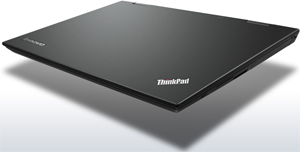
The result of this need to meet very fine-grained requirements is great complexity. The buyer of a 13″Mac Book Air has one choice to make: a 128- or 256-gigabyte solid-state storage device. The Lenovo ThinkPad X1, one of the most Air-like products, offers three different processors, optional Bluetooth, two flavors of mobile broadband, four Wi-Fi radios, 4 or 8 GB or RAM, and a choice of a conventional hard drive or two different SSDs, making 432 total hardware combinations.
This much variety complicates every stage of the supply chain, from buying components to stocking finished inventory. It raises costs. It also prevents optimizing the design around a set of component choices. (One consequence of the Air’s sleek, monolithic design–a big part of its esthetic appeal–is that what you buy is what you get; there are no field-upgradeable components.
In the consumer market, the problem is different but the result the same. Retailers (including Dell’s mostly online operation) want to have a product, or perhaps a choice of products, at every conceivable price point. This leads to a profusion of overlapping and very similar models and a product line that makes no sense even to very sophisticated buyers. When I asked Dell.com to show me 11″ to 14″ consumer notebooks, the site produced a page offering 12 different versions of two 14″ Inspiron notebooks, the 14R-2nd Gen and 14z (even the names are messy.)
Apple, by contrast, need not satisfy anyone but the ultimate user–and judging by the results, the lack of choice isn’t much of a problem. Even corporations, many of which are reluctantly buying Macs to meet the demands of their internal users, are learning to live with taking what Apple gives. This Apple-knows-best attitude strikes some people as paternalistic, even fascistic. But it produces great products that well-heeled buyers seem to love.