


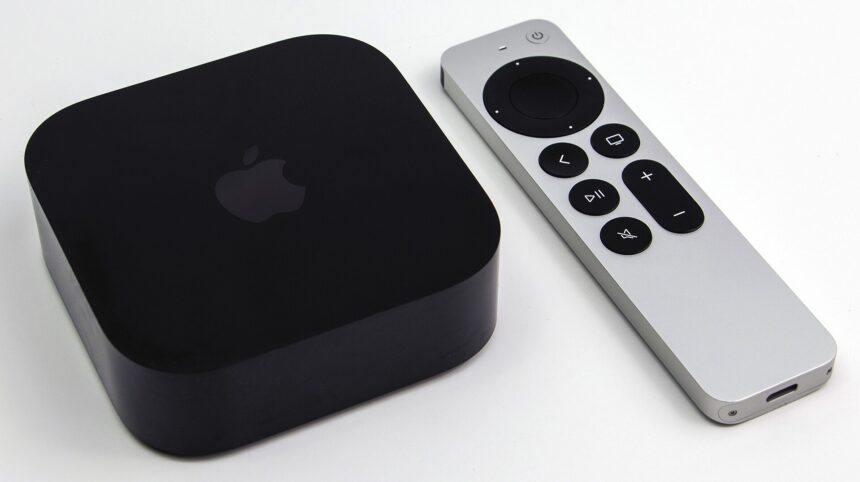
In June, you could buy a 128GB Apple TV 4K and a pair of HomePod minis for about $350. When the new versions ship this fall, the same setup will cost about $600. That math comes from Apple writer John Gruber, as summarized by MacRumors, and it captures Apple’s October 13 smart home announcements better than any feature list.
Apple introduced three home devices that day, Engadget reported: a $299 smart display called HomeView, a new Apple TV 4K at $299, and the HomePod mini 2 at $149. MacRumors flagged the Apple TV price the same day:
Apple TV 4K is Now Even More Expensive, 128GB Model Priced at $299 https://t.co/2nx2hEz3TI pic.twitter.com/3d7fmF0rMq
— MacRumors.com (@MacRumors) October 13, 2026
How the prices moved
The increases came in two steps. According to MacRumors, the 128GB Apple TV 4K was initially $149 and rose to $249 in late June. The new model, which comes only in a 128GB configuration, is $299. Before June, the cheapest Apple TV cost $129. The HomePod mini cost $99 before late June. Its successor is $149.
Apple did add real hardware. The new Apple TV 4K uses the A19 chip, adds far-field microphones for hands-free Siri, Wi-Fi 7 and more storage, and works with a redesigned Siri Remote that supports Find My. The HomePod mini 2 gets Apple’s S10 chip and can work as surround speakers for the Apple TV or as a Mac’s default speaker. Gruber still called the Apple TV worth it to him and the HomePod mini 2 reasonably priced. But his overall verdict, as MacRumors summarized it, was that the price increases are much more striking than the new features.
Apple has not explained the increases in the coverage of the launch. They do fit a pattern. Apple raised Mac and iPad prices in June, and on its July earnings call Tim Cook described a “100-year flood” in memory pricing, as we covered when Apple raised the price of every iPhone by at least $100 in September.
Why this one stings more
A price increase on an iPhone lands on a product people use for hours a day. The Apple TV and HomePod mini are a different kind of purchase. They have long been Apple’s cheap way in: a streaming box or a small speaker that brings a household into Apple’s ecosystem, then pulls along subscriptions like Apple TV+ and Apple Music, and more Apple devices over time. A $99 speaker is an impulse buy. A $149 one is a decision.
That matters because these are the products Apple needs to sell in volume if its smart home strategy is going to work. HomeView is meant to be the center of that home, with face recognition to show personal content for up to six people. A hub needs other devices to talk to. Raising the price of the most affordable ones makes the whole system more expensive to build out.
The case for the new prices
There is a reasonable argument on Apple’s side. The new Apple TV 4K is a substantially more capable device, built around the same chip as the iPhone 17, according to Engadget. Hands-free voice control and a remote you can find with your phone are meaningful upgrades. And if component costs are rising across the industry, a premium device absorbing a premium price is not surprising.
One caveat for buyers: the HomePod mini 2 will not support Apple’s new Siri AI features at launch. Engadget reported that Apple says they will arrive in a future software update, with no date given. Part of what justifies the higher price has not shipped yet.
What to watch
The test is whether the higher prices slow adoption of Apple’s home products, and whether competitors such as Google and Amazon use the opening. The bigger question is whether this is a temporary response to component costs or a new floor. If the next round of Apple home products launches at the same prices, the era of the cheap Apple entry point is over.
Related reading: Apple Raised the Price of a Year-Old iPhone by $100. · Microsoft’s AI Laptop Starts at $2,599. · Memory Prices Are on Track to Rise 400%.
