


When Google announced its first Wyoming data center on November 5, the headline number was the money: a long-term, $17 billion investment in Laramie County, according to Google’s announcement. The more revealing numbers are about power. A utility filing says the project’s total resource mix is 2.7 gigawatts, and the largest sources named so far run on natural gas.
Data Center Dynamics shared the news on X:
Google announces $17bn data center campus in Cheyenne, Wyoming dlvr.it/TWD62h pic.twitter.com/2qwJUpdXBK
— DCD (@dcdnews) November 6, 2026
I think this project is the clearest picture yet of how the AI build-out is actually being powered: not mainly by new wind and solar, but by gas, with carbon capture promised on top.
Where the power comes from
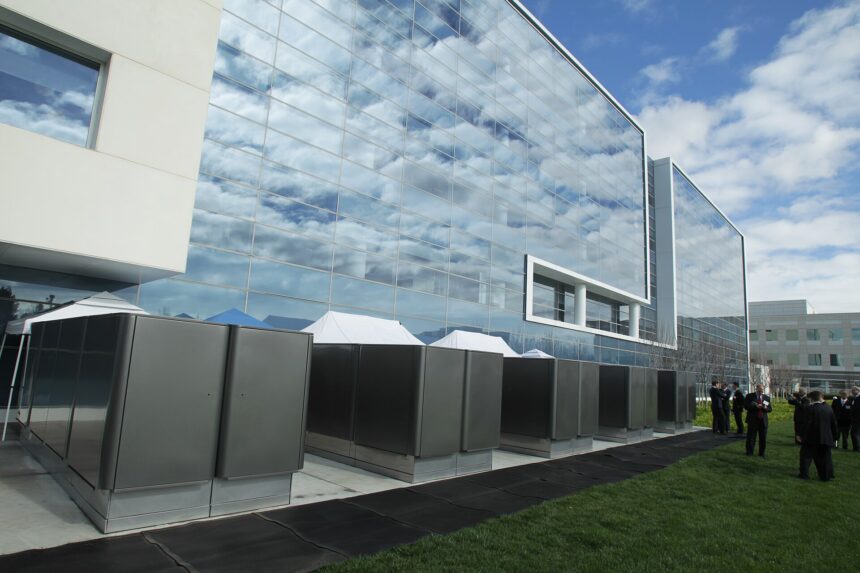
Google says the site will include a 702-megawatt fuel cell development contracted with American Electric Power, using fuel cells made by Bloom Energy, which it calls the largest planned development of its kind. Those fuel cells run on natural gas, and Google says carbon capture and storage will permanently store “a large majority” of their emissions at Tallgrass Energy’s nearby sequestration hub. Google also says it will source power from gas generators operated by Tallgrass and Black Hills Energy.
The utility side is spelled out in a Black Hills Corp. filing from October. Black Hills plans to invest $1.8 billion between 2027 and 2029 to build 564 megawatts of new natural gas generation, and to manage about 2.1 gigawatts of third-party resources through a private microgrid, for a total of 2.7 gigawatts including reserve margins. The filing does not break down what fuels that third-party portion. Service is planned to start in late 2027 and ramp to peak load in 2030.
Who pays
This is where the project is genuinely different from many earlier data center deals. Google says it “will pay for 100% of the power we use” and cover infrastructure needs driven by its growth. Black Hills’ chief executive, Linn Evans, said in the filing that Google bears all costs of serving the data center for the life of the project, and the company says the deal is structured so those costs do not shift to existing customers, with protections for stranded assets and early termination.
My take: that structure answers the question that has turned many communities against data centers, which is whether households will end up paying for a tech company’s power. It is a model other utilities and data center developers should be asked to match.
The case for Google’s approach
There is a strong argument for doing it this way. AI data centers need power around the clock, which wind and solar alone cannot yet provide without huge amounts of storage. Fuel cells produce power on site, avoiding long transmission builds. Google says the data center will be air-cooled to limit water use, an important point in a dry state, and it expects the project to generate hundreds of millions of dollars in local property taxes for Laramie County and its schools. It also says it met with more than 200 residents and is setting up a community council with its partners.
The counterpoint is that the climate benefit depends on carbon capture working at a scale it rarely has, and on Google’s study of adding capture to Tallgrass’s gas turbines, which is still at the engineering study stage. Until those are proven, a 2.7-gigawatt campus is a significant new source of gas demand.
The local politics
The timing is notable. Voters opposed data centers in 40 of 41 local ballot measures on November 3, according to ConstructConnect, citing Ballotpedia, though it noted that is not evidence of a specific threat to Google’s project. I’d argue Google’s Wyoming terms look designed for exactly that climate: pay your own way, use less water, and put the tax revenue up front.
What to watch
Watch the transmission filings Black Hills says are still coming, since who pays for new transmission is the part of the cost question the filing does not fully settle. Watch whether the carbon capture is built and operating when the fuel cells are. And watch whether other big data center projects adopt the same “the customer pays everything” terms, or whether Wyoming turns out to be the exception.
Related reading: Data Centers Were on 41 Local Ballots Tuesday. Voters Sided With the Industry Once. · Meta Has $82 Billion in Cash. It Plans to Sell Up to $95 Billion in Stock Anyway.