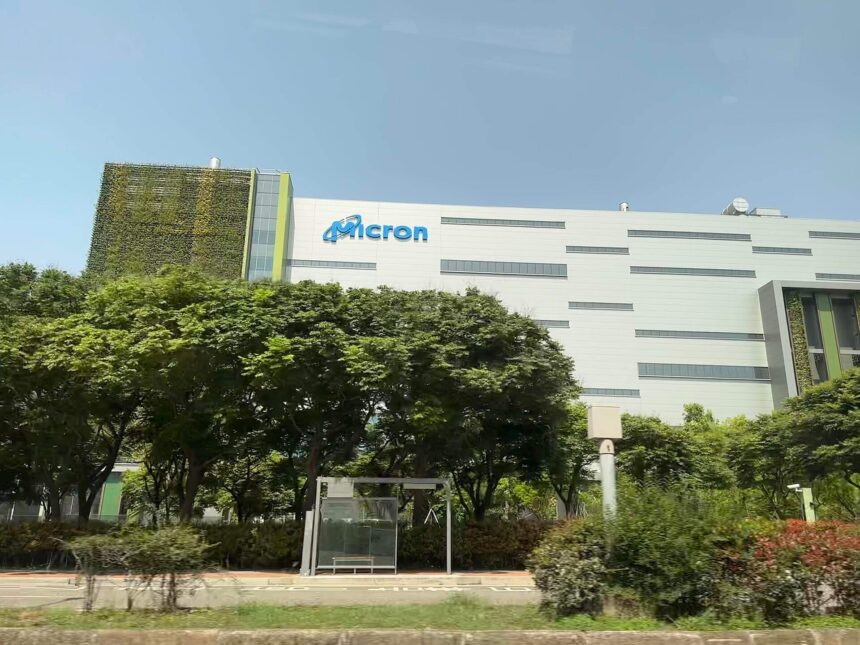
On October 22, a union at Micron Technology’s plant in Taoyuan staged what Nikkei Asia called the first strike in the history of Taiwan’s semiconductor industry. The dispute is over pay and bonuses that workers say do not reflect the profits Micron is earning from AI memory.
Those profits are very large. In the quarter that ended September 3, Micron reported revenue of $54.23 billion, up from $11.32 billion a year earlier, and net income of $37.70 billion, according to its earnings release. Its gross margin was 86.8 percent. For the full fiscal year, net income was $84.97 billion, almost ten times the $8.54 billion it earned the year before.
As a show of force, the walkout was small. Its significance is in the demand behind it. The union is not just asking for a bigger bonus. It wants a permanent formula, and the company has resisted committing to a number.
A small strike with a big demand
The union wants a one-time bonus worth 83 months of salary and a permanent system that allocates 15 percent of operating profit to worker bonuses, paid quarterly instead of annually, AFP reported. Micron said last month it would pay up to 68 months of salary. Workers rejected it.
Turnout was far below the union’s plans. More than 2,000 Taoyuan employees had planned to stop work, but AFP counted five strikers outside the plant. The action was a 24-hour warning strike that ended the next morning, and nearly 70 percent of union members rejected management’s new bonus offer, DigiTimes reported.
Reuters reported earlier this month that the Taoyuan union had secured authorization to strike:
Micron's Taoyuan union in Taiwan secures authorisation to strike https://t.co/BCYiQfelHN
— Reuters Legal (@ReutersLegal) October 7, 2026
Micron’s position has moved. Micron Taiwan chairman Lu Dong-hui said the company had agreed to switch to a quarterly profit-sharing bonus and raise pension contributions, AFP reported, and he called the strike regrettable. But the union says the company still has not put a percentage on the table. A second union, at Micron’s Taichung operations, signed an agreement with the company on October 21. Its terms have not been disclosed.
The real fight is over the shape of the payout
Take the two offers side by side. Micron’s 68 months and the union’s 83 months are both enormous; either would pay a worker more than five years of salary as a single bonus. The gap between them matters less than the gap between a one-time payment and a fixed share of profits.
A one-time bonus treats the AI memory boom as a windfall: share it once, then return to normal. A permanent percentage treats it as a new baseline that workers should keep benefiting from. Each side’s offer reflects a different bet on how long the boom lasts.
The union’s benchmark comes from Korea. Samsung Electronics avoided a strike by agreeing to pay its semiconductor employees bonuses equal to 10.5 percent of operating profit, according to AFP. Samsung and Micron compete for the same customers, and the same experienced fab engineers. Once one memory maker ties pay to a published formula, workers at the others have a number to point to.
The stakes for Micron are concentrated. AFP reported that the company makes roughly 50 to 60 percent of its chips in Taiwan. In an industry that had never had a strike in Taiwan, a first one, however small, changes what workers at other chipmakers there can imagine asking for. They will be watching how it ends.
The case for Micron’s caution
Micron has a real argument. Its own numbers show how fast memory profits can move: net income grew almost tenfold in a single year, and what rises that quickly can fall quickly too. A company that writes a permanent formula into a labor agreement at the peak of a cycle may find it hard to unwind.
A percentage of profit does shrink automatically when profit falls, which is part of why unions favor it. But a formula also sets a precedent. If Micron agrees to 15 percent in Taiwan, workers at its plants elsewhere will ask why they should get less. Micron’s preference for large one-time payments keeps its options open.
The turnout also undercuts the union. If only a handful of workers walked out, Micron can reasonably argue that most employees are not prepared to strike over the formula, and that the Taichung settlement shows a deal is possible without one.
What happens next
Micron expects revenue of about $61.5 billion in the current quarter, higher again than the last. The better the results, the harder it will be to argue that workers should be paid as though the boom were temporary. The Taoyuan union has warned that more workers could strike if Micron does not make what it calls a sincere proposal, AFP reported.
The AI boom’s profits have so far flowed mainly to chipmakers and their shareholders. Micron’s dispute is one of the first tests of whether the people running the fabs can claim a fixed share of them.
Related reading: Memory prices are on track to rise 400%. Your next phone is paying for AI.; Chip stocks slid for six straight days. TSMC’s CEO says AI demand still exceeds supply.; TSMC will put 30% of its most advanced chipmaking in Arizona.