


It is hard to argue with the narrative — larger phones are impacting tablet sales. This absolutely seems to be the case:
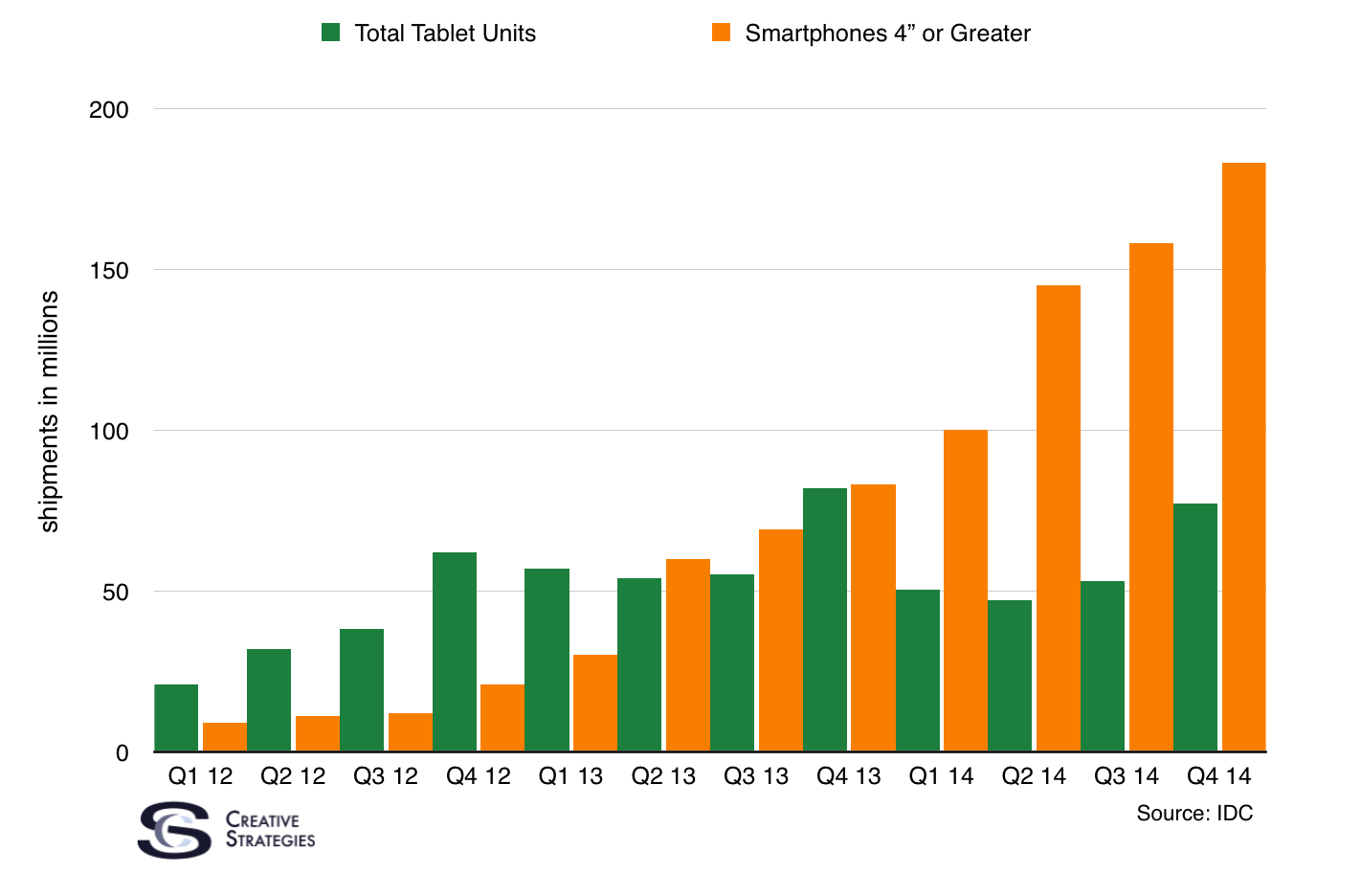
Two points from the chart. Including 4″ smartphones certainly helps the line look impressive. But I don’t have screen size breakdown sales any more granularly than this. Tablet sales don’t appear to be in as much as a decline as it is a flat-ish line. One can say there is no corollary to large screens impacting tablets because the line is flat. However, there is a direct correlation to the tablet market “slow down” and larger screen smartphones gaining in sales.
Charts from Flurry illustrate this.

The growth in the larger “phablet” form factor impacted tablets by decreasing active usage of large tablets and kept smaller tablet usage flat. During the 2011-2014 period, there was steady growth within the tablet industry. As larger phones began to gain steam, we see different tablet market dynamics.
Flurry also breaks out device form factor by smartphone and tablet usage out by operating system as well. From this we can glean some additional insights.

I have a number of observations/interpretations from this particular chart. I’ll break them out by platform.
Android Tablet Land
Flurry’s data regarding Android tablets re-affirms the many Android tablet observations myself and others have been making based on our research of the segment. Consistently, we find tablet usage and engagement is weak in Android land. Android tablet sales, going back to the beginning of 2013, have an estimated total of 340 million units. Tracking that against my Android installed base estimates, it puts active Android tablets via Flurry’s data at roughly 120 million units if we just focus on the past few years worth of sales. Meaning, approximately 220 million Android tablets are no longer in use or not accessing the internet via apps. The latter is not surprising. We know low end Android tablets do not drive heavy app or internet engagement and are mostly used, globally, for entertainment media like video. What is surprising to me from this estimate is what appears to be a very short life for Android tablets. If my estimates are correct, or even in the ballpark, it suggests a much shorter average life cycle for Android tablets vs iPads. Perhaps chalk that up to the bulk of Android tablets being sold cost less than $150 and are relatively poor quality, or that there is little value found from the end users, therefore they are bought for cheap and then discarded when value was not captured or the hardware failed.
iPad Land
Large tablets remain the bulk of iPad usage according to Flurry. This is interesting, particularly as I have tried to track the mix of iPads sold and have believed for some time large iPads were still a healthy part of the mix despite other reports. However, what we are keen to watch is what impact the larger iPhones have on the iPad usage data. Flurry’s data toward the end of the year or this time next year will perhaps give us the most clear indications, but iPad sales as well throughout the year will shed light.
At this point, I’m not expecting iPads to grow much even if a new larger iPad Pro is released. It seems, at least for now from data we see, that the iPad may have penetrated as far as it can into the Apple unique user base. My estimates are that the iPad penetrated about 40% of Apple’s unique individual user base (different from installed base). The other dynamic playing into the iPad is the evolving nature of the device to be more shared than individual. Many consumers said they share the tablet with one person or more. This represents over 50% of users in our study indicated a shared dynamic with their iPad.
We agree the iPad, and tablets in general, have an interesting role to play with businesses but the realization of that growth may represent more a slow burn in momentum than quick bursts like we saw right out of the gate. Going back to some of my thesis for tablets, that they are ideal computers for people who do not sit a desk all day for their jobs but work in the field, I came across this graphic from 2013. I don’t think a great deal has changed.

Note the number of workers who likely don’t sit much during their work schedule. Industrial workers, services workers, perhaps even agriculture workers, are all jobs where being mobile is the norm. These jobs are areas I still feel tablets have a great deal of upside. As I am fond of stating, the tablet has a role to play in disrupting clipboards in the commercial segment more than they do traditional PCs.
The narrative for tablets is not over. The segment is changing, not dead. This is why we evolve our thinking as we learn how the market and user needs/behaviors change. We are still in the midst of the largest global roll out of consumer technology ever seen. We are bringing millions of new consumers onto the internet every day. Many computing devices will exist to serve different user’s needs and be there for new ones as those needs develop and evolve. The dynamic analysis of this industry is what makes it fun but also what challenges the perspective of most observers.