

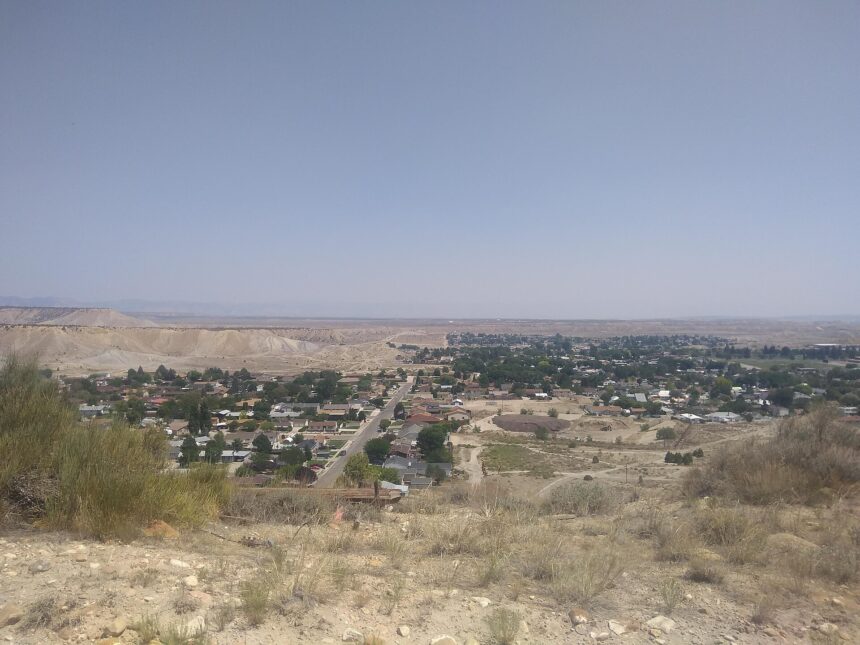
A startup has asked the federal government for more than 9,500 acres of public land in eastern Utah so it can build 456 nuclear reactors next to a campus of AI data centers. If it works, the project would generate about 9.6 gigawatts of electricity. The entire state of Utah averages about 4.
The company is Valar Atomics, the project is called Project Beehive, and the details come from NPR’s reporting this week. The plan also includes a facility to make nuclear fuel and another to store nuclear waste, all on land managed by the Bureau of Land Management near the town of Price. Non-nuclear construction could begin by the end of this year, with the first reactors running in 2028 and the full build finished by 2032.
It is easy to read that as either the future of American energy or a fantasy. The more useful reading is that Project Beehive is a bet on one specific idea, and the number that matters most is not 456.
What Valar has actually built
Valar is not starting from nothing. In June, its Ward 250 test reactor in Emery County became the second reactor to reach criticality under the Energy Department’s fast-track Reactor Pilot Program, and the first built and run outside the national laboratory system, according to the Energy Department. On July 1, the reactor generated electricity that powered a single Nvidia desktop AI computer, and in August the company raised $1 billion at a $6 billion valuation in a round led by Sequoia.
Taylor announced the criticality milestone on X:
Moments ago, Valar Atomics took Ward 250 critical for the first time. This fulfills President Trump’s EO 14301, which called for 3 advanced reactors to go critical by July 4th.
This is our second criticality as a company, and an important step toward our goal of power by July 4. pic.twitter.com/ZNVgKSarfV
— Isaiah Taylor – making nuclear reactors (@isaiah_p_taylor) June 18, 2026
Those are real milestones, reached fast. They are also small. That first criticality test was a zero-power demonstration, and the reactor is rated for 100 kilowatts of thermal output during testing. Project Beehive needs hundreds of commercial units, each in the tens of megawatts of electricity.
The real bet is the factory, and the license
Here is the context that makes the plan both plausible and audacious. Since 2000, the United States has commissioned just three new nuclear plants with a combined 3.4 gigawatts of capacity, NPR noted. Project Beehive alone proposes nearly three times that. Traditional nuclear plants are giant, one-off construction projects.
Valar’s answer is to stop building plants and start manufacturing reactors: small, identical units produced on a line and installed by the hundred. That is why the reactor count is the least interesting number in the proposal. A plan for 456 reactors is really a claim that a startup can do what no nuclear company has done, and turn reactors into a product with a factory learning curve. The $1 billion is meant to pay for the larger commercial designs and for progress toward a commercial license from the Nuclear Regulatory Commission, a step Tech Times noted no nuclear startup has yet completed.
That license is the gate. The Energy Department’s pilot program let Valar build and test a reactor quickly. Selling power to data centers at commercial scale is a different matter, and the timeline of 2028 for the first units leaves little room for a full commercial review.
The fight over the land
Then there is the location. The Bureau of Land Management told NPR it is reviewing Valar’s application for completeness, and that the public will get meaningful opportunities to weigh in through the federal environmental review process.
Supporters see exactly the kind of project the country needs: carbon-free power for an AI buildout that is straining grids. Valar’s chief executive, Isaiah Taylor, has said the company is acting responsibly and accountably to the community. Opponents see something else. Neal Clark of the Southern Utah Wilderness Alliance told NPR it is concerning to see the administration push the project forward on public lands, and Lexi Tuddenham of the Healthy Environment Alliance of Utah said the priority now is making sure people know about it. The waste storage piece, in particular, is likely to draw the most scrutiny.
This is the same tension playing out across the country. In Texas, a state that has courted data centers aggressively, 57 percent of voters said they would not want one near their home. Project Beehive tries to sidestep that problem by going where there are few neighbors. It trades that problem for a different one: on public land, every American is a stakeholder.
What would count as progress
The headline numbers will not tell you whether this is working. Three milestones will. The first is a commercial NRC license for any Valar design. The second is evidence of an actual reactor production line, with the cost of the tenth unit visibly lower than the first. The third is a signed data center customer willing to build next to them. Until those appear, Project Beehive is less a power plant than a very large option on whether factory-built nuclear can work at all. If it can, 456 reactors in Utah will look like a beginning. If it can’t, it will look like a land application.
Related reading: 57% of Texas Voters Don’t Want a Data Center Next Door. · AI’s Energy Use Is Both Wildly Overblown and Seriously Underrated. · Memory Prices Are on Track to Rise 400%.