


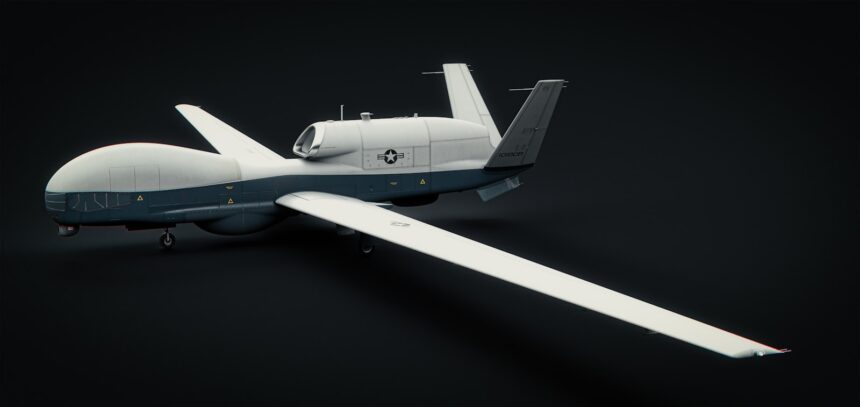
Defense technology startups raised $49.1 billion in 2025 — nearly double the prior year’s total. Ten new unicorns emerged. Anduril hit a $30.5 billion valuation. And the question that matters for 2026 isn’t whether defense tech is real. It’s whether the capital flooding into the sector is building durable companies or inflating a wartime bubble that peacetime economics can’t sustain.
The numbers are staggering by any measure. Equity funding for defense tech startups more than doubled to $17.9 billion from $7.3 billion in 2024. Venture capital exits from defense investments surged to $54.4 billion from $18.2 billion. The combined valuation of defense tech unicorns now approaches $495 billion. This isn’t a niche sector anymore — it’s one of the largest and fastest-growing verticals in venture capital, rivaling generative AI for investor attention and outpacing it in revenue fundamentals.
The mega-rounds reshaping the landscape
The scale of individual raises tells the story. Anduril Industries closed a $2.5 billion round at a $30.5 billion valuation, with Peter Thiel’s Founders Fund writing a $1 billion check — the largest in the firm’s history. The company reported $1 billion in 2024 revenue, making it one of the few defense tech startups with a valuation grounded in actual commercial performance rather than speculative multiples.
But Anduril isn’t alone at the top. Munich-based Helsing raised $694 million in Series D funding to apply AI to European defense modernization. Saronic closed $600 million for autonomous surface vessels. CHAOS Industries pulled in $275 million led by Accel. Hadrian raised $260 million from Founders Fund and Lux Capital for defense manufacturing. VCs doubled down on LA defense tech startups with $4 billion in investment, making Southern California a serious contender to Northern Virginia as the sector’s geographic center of gravity.
Shield AI, the San Diego autonomous drone company, hit $300 million in annual revenue and a $5.6 billion valuation, with investors including Palantir, Airbus, and Lockheed Martin. The company’s trajectory illustrates a pattern: the defense tech firms gaining the most traction aren’t just building technology — they’re building businesses with government contracts, recurring revenue, and clear paths to profitability.
Why the money is flowing — and why it might not stop
Three structural forces are driving capital into defense tech, and none of them are going away soon.
Global military spending has hit unprecedented levels. World military expenditure reached $2.718 trillion in 2024 — a 9.4% increase over 2023 and the steepest year-on-year rise in over 30 years. The Pentagon’s fiscal year 2026 budget request totals $961.6 billion in base funding, with an additional $150 billion sought under reconciliation legislation. When governments spend more on defense, the companies supplying defense technology grow. This isn’t cyclical — it’s a structural rearmament driven by geopolitical competition with China, Russia’s ongoing war in Ukraine, and instability across the Middle East.
Battlefield validation has collapsed the technology risk. Ukraine became the world’s most consequential proving ground for defense technology, demonstrating that autonomous drones, AI-driven targeting, electronic warfare systems, and commercial satellite networks could reshape modern combat. Venture capital is reshaping the defense tech landscape because investors can now point to real-world performance data rather than theoretical capability slides. The technology risk that kept mainstream VCs away from defense for decades has been replaced by execution risk — which is exactly the kind of risk Silicon Valley knows how to manage.
The Pentagon is actively courting startup innovation. The Army’s FUZE program uses a venture capital-style model to invest in promising tech companies. The Defense Innovation Unit continues to accelerate commercial technology adoption. And budget priorities for 2026 explicitly emphasize AI-enabled systems, autonomous platforms, and collaborative combat aircraft — categories where startups hold advantages over legacy primes.
The $10 billion question
Here’s where it gets complicated. The capital flowing into defense tech is based on a thesis that looks bulletproof: rising military budgets, proven technology, urgent operational needs, and government procurement reform that favors agile startups over slow-moving incumbents. Every element of that thesis is currently true.
But defense markets have a history of punishing venture investors who conflate wartime urgency with peacetime procurement reality. Government contracts are long, unpredictable, and subject to political shifts that no amount of product-market fit can overcome. The companies raising hundreds of millions today need to convert that capital into production-scale manufacturing, navigate Byzantine acquisition processes, and maintain growth rates that justify valuations built on commercial tech multiples applied to government revenue.
The manufacturing challenge is particularly acute. Defense-focused manufacturing investment reached $4.7 billion across 39 deals in 2025, but scaling from prototype to production is where many defense startups historically fail. Companies like Firehawk Aerospace are betting that new propulsion and manufacturing approaches can break through traditional production bottlenecks, but the gap between a successful demonstration and a reliable production line remains the sector’s most underappreciated risk.
Then there’s the concentration problem. American defense tech startups attracted $14.2 billion of the $17.9 billion in global equity funding — nearly 80% of the total. European defense tech funding rose 38% to $2.48 billion, but the disparity reflects both a market opportunity and a vulnerability. If U.S. defense budgets face political pressure — and budgets always eventually face political pressure — the sector’s geographic concentration becomes a systemic risk.
The emerging defense tech stack
The most sophisticated investors aren’t just picking individual defense companies — they’re mapping a defense technology stack that mirrors the layered architecture of enterprise software.
At the infrastructure layer, companies like Anduril (partnering with Impulse Space on satellite operations) and Palantir are building the operating systems and data platforms that other defense applications run on. Anduril’s Lattice software and Palantir’s cloud-based AI platform formed a consortium in late 2024 specifically to integrate their capabilities — a move that positions them as the AWS and Azure of military computing.
At the application layer, specialized startups are attacking specific domains: Spear AI in submarine surveillance, Saronic in autonomous naval vessels, Shield AI in autonomous air operations, and Quantum-Systems and Destinus in drone manufacturing. These companies benefit from the platform investments being made at the infrastructure layer while maintaining domain expertise that’s difficult to replicate.
At the enabling layer, firms like Wave Function Ventures and other deep-tech-focused funds are backing the foundational technologies — advanced materials, novel sensors, quantum communications — that feed into both the infrastructure and application layers. This is where the longest-duration bets are being made, and where the returns could be most asymmetric.
The uncomfortable conversation
Defense tech’s financial success has largely silenced the ethical debate that once kept Silicon Valley’s mainstream away from military work. Google’s 2018 employee revolt over Project Maven feels like ancient history. OpenAI has signed its first Pentagon contracts. Meta is building extended reality devices for the military. Y Combinator funded a cruise missile startup. The cultural shift is complete.
But the uncomfortable questions haven’t gone away — they’ve just been drowned out by the sound of money. Autonomous weapons raise genuine concerns about human oversight and accountability. The “military-industrial-venture complex” — where strategic authority migrates from public institutions to private capital — challenges democratic governance norms that existed for good reasons. And the venture-backed model of rapid iteration and deployment, which works brilliantly for consumer software, carries different implications when the product is designed to destroy things.
These aren’t reasons to avoid investing in defense technology. National security is a legitimate and critical need, and the innovation that startups bring to defense is genuinely making systems more effective, more precise, and in many cases safer for both operators and civilians. But the sector’s ethical complexity means that the companies building the strongest governance frameworks — not just the fastest growth rates — will be the most durable long-term investments.
What smart money is doing right now
The investors with the best track records in defense tech are making three specific bets for 2026.
Manufacturing scale over technology novelty. The next competitive battleground isn’t who has the best AI model — it’s who can build thousands of autonomous systems at predictable cost. The defense startups that master production economics will capture disproportionate contract value, and the ones that can’t will become acquisition targets for legacy primes looking to buy proven technology.
Platform plays over point solutions. Companies that control data layers and orchestration systems — the connective tissue between individual weapons systems, sensors, and command structures — will generate more durable competitive advantages than companies selling individual hardware products. This is the enterprise software playbook applied to defense, and it’s working.
Allied market expansion. With NATO countries increasing defense spending and Indo-Pacific nations investing heavily in military modernization, the defense tech companies that can navigate international export controls and build relationships with allied procurement agencies will access markets that double or triple their addressable revenue. The sector’s 80% U.S. concentration is a bug, not a feature, and the investors who recognize that are positioning accordingly.
Defense tech’s $49.1 billion year wasn’t an anomaly — it was the market recognizing a structural shift that’s been building since Russia invaded Ukraine and China accelerated its military modernization. The capital is real, the demand is real, and the companies are building real revenue. But the gap between a record funding year and a record outcomes year is where most of the risk — and most of the opportunity — still lives.