


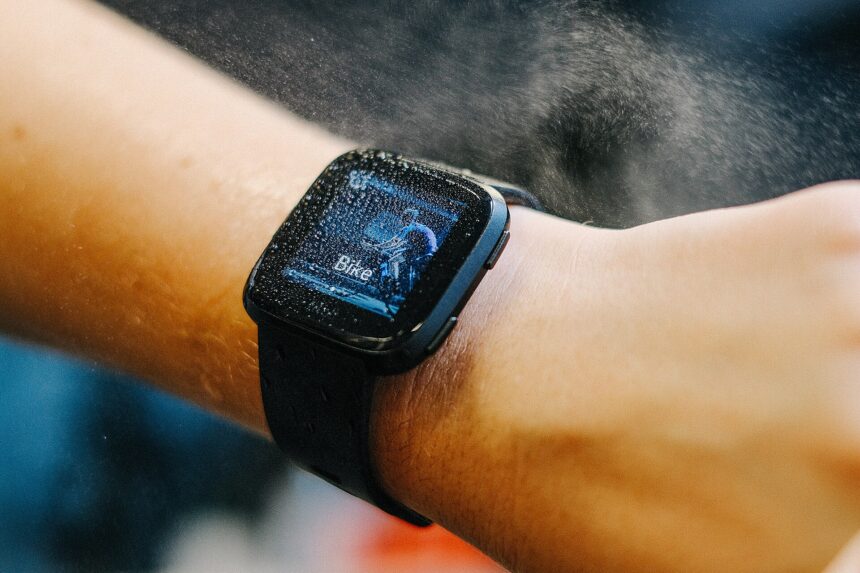
If you wear a Fitbit Sense or Versa, the watch face you picked from an independent designer is about to become something you cannot get back. Starting November 28, owners of eight Fitbit smartwatches can no longer install or update third-party apps and clock faces, according to Google’s help page. What is already on your watch keeps working. But if you delete it or reset the watch, it is gone for good.
The French tech site Frandroid summed up the catch in one line:
Dès le 28 novembre, Google ferme la galerie Fitbit aux cadrans et applications tiers : ce qui est installé reste, mais une réinitialisation l'effacera pour de bon. https://t.co/KukplavI5A
— Frandroid (@Frandroid) November 10, 2026
I think this is less a small store change than the clearest sign yet that Google is done building Fitbit’s own smartwatch platform.
What changes on Nov. 28
Google’s help page lists the affected watches: the Sense and Sense 2, the Versa, Versa Lite, Versa 2, Versa 3 and Versa 4, and the Ionic, which was recalled. After the cutoff, the gallery will feature only apps and clock faces made by Fitbit and Google, 9to5Google reported when the change was announced on November 9.
Developers are cut off on the same day. Google will stop accepting new uploads and updates to existing ones, and the gallery’s admin tools will be retired, according to 9to5Google, which said developers can download their projects or ask for them to be removed before then. Google’s help page gives no reason for the change.
What owners should do now
The practical advice is short. Google says installed third-party apps and clocks will continue to work, but “you will no longer be able to re-install” anything you delete or lose to a factory reset. So if you like a third-party face, keep it installed, and think twice before resetting the watch to fix a glitch. Google also tells owners to update its companion app, which the help page calls the Google Health app, to version 5.12 so existing apps keep working.
If a favorite app depends on its developer pushing fixes, expect it to slowly break as phones and services change around it. Nothing on Google’s page suggests there will be a way to update it after November 28.
The bigger picture: Fitbit’s platform is winding down
This did not come out of nowhere. Owners in the European Economic Area already lost third-party installs in June 2024, the5krunner noted. Now the same restriction goes worldwide. Google has been all-in on Wear OS and the Pixel Watch, 9to5Google observed, and the Pixel Watch gets its third-party apps from Google Play instead.
My take: an app store that no longer accepts new apps or updates is a platform in maintenance mode. People who bought a Sense 2 or Versa 4 recently were buying into an ecosystem that, for anything beyond Google’s own software, has now stopped growing. That is a real cost, even if the watches themselves keep counting steps and tracking sleep exactly as before.
The case for Google’s decision
There is a reasonable argument on Google’s side. Running a separate app store for an older watch platform means maintaining developer tools, reviewing submissions and keeping all of it secure, for a shrinking set of devices. Consolidating on Wear OS gives developers one platform with Google Play distribution, rather than two. And Google is not remotely disabling anything: what owners have installed keeps running, and Google’s own gallery of apps and clocks remains available.
For many owners, the change will pass without notice. Most people use a handful of built-in faces and Fitbit’s core health tracking, which this does not touch.
The counterpoint is about ownership. The people most affected are the enthusiasts who customized their watches with independent faces and apps, and the small developers who built them. A purchase that was sold partly on a customizable app gallery now has a frozen one, and Google has not explained why.
What to watch
I’d watch two things. First, whether Google keeps selling the Sense 2 and Versa 4 without a clear statement about how long they will get software support. Second, whether the rest of Fitbit’s watch software follows the gallery into maintenance mode. For now, the simplest step is the one Google’s own wording implies: if there is a third-party face or app you would miss, do not delete it.
Related reading: Google Classroom Has 150 Million Users. Their Schools Can No Longer Get Google Search Without the AI. · Apple’s $1,999 iPhone Duo Is Back-Ordered to January.