


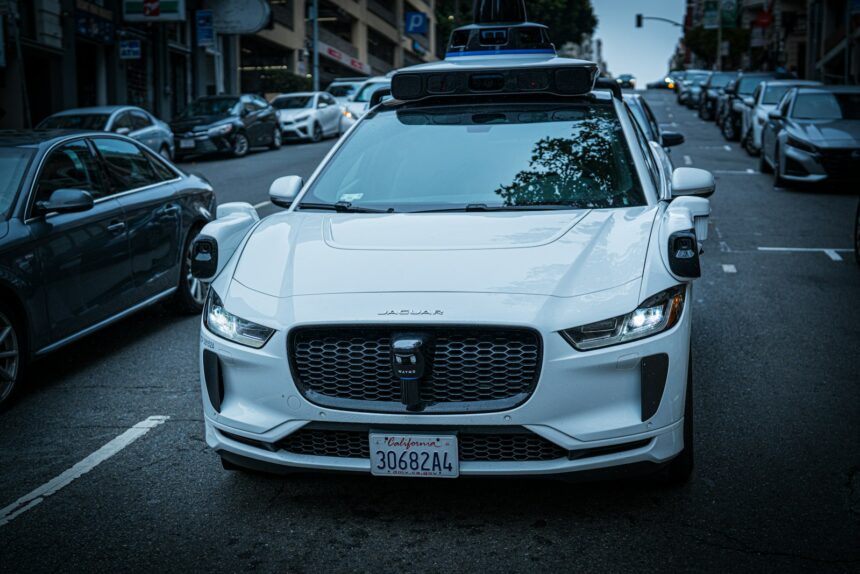
The most rigorous independent look yet at whether robotaxis are safer than people arrived this summer, and the headline number is striking. Researchers at the Insurance Institute for Highway Safety compared Waymo’s driverless vehicles against human drivers in the four cities where they operate most heavily and found the robotaxis involved in 68 percent fewer police-reportable crashes per mile, with injury crashes 81 percent lower and single-vehicle crashes 85 percent lower.
That is a serious finding from a serious institution, and it deserves to be taken seriously. But there are two things buried underneath it that matter more than the headline, and neither is getting much attention. The first is that the safety advantage varies enormously by city. The second is that we cannot actually answer the question “are robotaxis safe” — only “is Waymo safe” — and the reason why is a structural problem nobody has solved.
The number that isn’t one number
Break the aggregate apart and the picture gets more interesting. The safety advantage ranged from 76 percent fewer crashes in Phoenix to 35 percent in San Francisco — and in Austin the crash rate was actually 4 percent higher than human drivers, though the researchers noted the Austin sample was small.
That spread is the most instructive thing in the study, because it suggests safety is not a fixed property of the technology. It is a property of the technology in a specific place, after a specific amount of operating experience. Phoenix is where Waymo has driven longest, on wide, sunny, grid-pattern roads. San Francisco is dense, hilly, and chaotic. Austin was new. The same software produces meaningfully different outcomes depending on how well it knows the ground beneath it.
This complicates the way the industry likes to talk about itself. “Our system is safer than humans” implies a portable, general capability — something you validate once and then deploy anywhere. The city-level data suggests something closer to the opposite: each new market is a partial reset, where the safety record has to be earned again. A robotaxi in its first month in a new city is not the same product as one in its fifth year in Phoenix, even running identical code.
Why we only know this about one company
Now the bigger problem, and it is the one that should worry regulators most. The IIHS could study Waymo for a specific and slightly alarming reason: Waymo is the only major operator that voluntarily publishes how many driverless miles it drives.
Crash counts alone tell you nothing. A company with a hundred crashes might be reckless or might simply be enormous. To calculate a rate you need the denominator — miles traveled — and as Axios noted in reporting the study, while U.S. companies must report incidents involving automated driving systems, most do not disclose how many miles their vehicles travel, leaving researchers unable to compute meaningful rates or compare operators.
Sit with the implication. The company with the best safety record is the only one whose safety record can be checked. That is not a coincidence — publishing your denominator is easy when the resulting number flatters you — but it means the public conversation about autonomous-vehicle safety is being conducted almost entirely on data from the operator with the strongest incentive to share it. Every competitor’s performance is, functionally, unknown. Not bad. Unknown, which is a different and in some ways worse condition.
Even the good data required heavy cleaning. The researchers discarded roughly a quarter of reported AV crashes as duplicates, off-road incidents, or not genuine crashes, then further narrowed to incidents a human driver would plausibly have reported to police — because autonomous vehicles report everything and humans report almost nothing minor. That last adjustment is doing a lot of work, and reasonable people can argue about where exactly to draw it.
The claim that doesn’t survive the data
There is one popular argument for robotaxis that this year’s research quietly undercuts: that they will reduce congestion by replacing private cars. A peer-reviewed analysis of Waymo’s California operations found that only about 54 percent of its miles were driven with a passenger aboard, with the rest spent repositioning or waiting. That roughly 44 percent empty-mile rate is comparable to the 40-plus percent estimated for Uber and Lyft — so robotaxis are not uniquely wasteful, but they are also not the traffic solution their boosters describe. A driverless car circling at 2 a.m. waiting for a request is still a car in traffic.
Meanwhile the scale is no longer experimental. Waymo reports having driven 220.6 million rider-only miles through March 2026. Whatever else is true, this has stopped being a pilot.
What would actually settle this
The honest summary is that the evidence for autonomous driving is better than skeptics admit and narrower than advocates imply. One company, in a handful of mapped cities, with years of local operating history, appears to crash meaningfully less than the humans around it. That is a real achievement and probably the most important safety development in ground transportation in decades. It is also not the same claim as “self-driving cars are safe,” and the gap between those two sentences is where most of the public confusion lives.
The fix is unglamorous and entirely within reach: require every operator to report miles traveled alongside incidents. Not proprietary code, not sensor data — just the denominator. It costs nothing to disclose, it is impossible to spin, and it would convert a debate currently run on one company’s voluntary transparency into something an independent researcher could actually adjudicate. Until that exists, every safety claim from an operator that does not publish its mileage should be read as marketing, because there is no way to check it — and the one company that does publish keeps demonstrating that the checkable version is more persuasive than any press release.
Related reading: Right to Repair Won. Then the Fight Moved Somewhere Harder to See.