


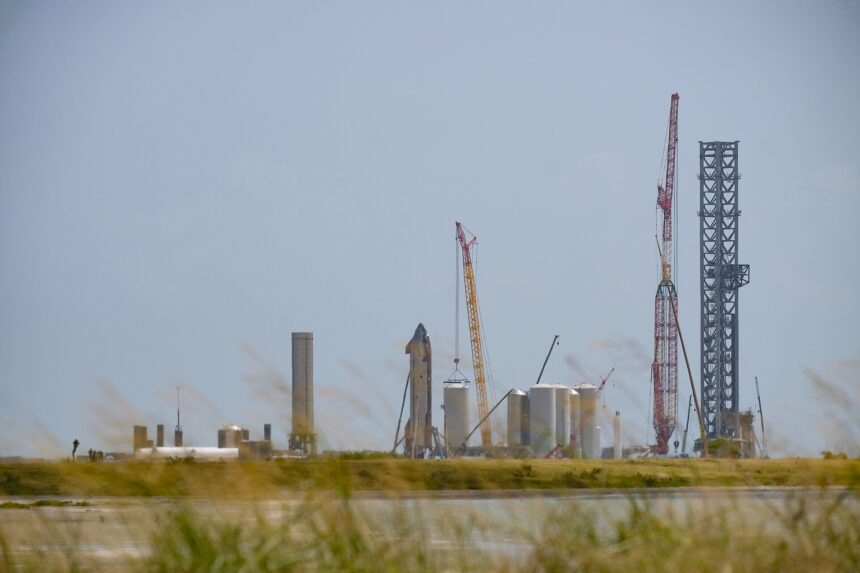
On Saturday afternoon, about 22 and a half hours after it lifted off from Texas, a Starship upper stage came back from orbit and was caught by the arms of its launch tower. It was the first time SpaceX has caught the ship rather than letting it splash down, SpaceQ reported. The booster that launched it the day before was not so lucky: it called off its own catch and was lost in the Gulf of Mexico.
Space.com tracked the ship’s progress during the long coast in orbit:
Starship Flight 15: Ship 42 is in good health and coasting in orbit after successfully deploying all 26 Starlink satellites. Flight controllers skipped an 'early return' option for a Hawaii splashdown (1 of 3) to forge onward with today's 14-orbit, 22-hr test flight.…
— SPACE.com (@SPACEdotcom) November 14, 2026
I think the headline result, a ship caught from orbit, is the more important half of this flight. But the booster record is the part that should worry anyone counting on Starship’s schedule.
What happened on Flight 15
Flight 15 launched at about 4:47 p.m. Central on November 13 from Starbase, Texas, pairing Booster 22 with Ship 42, according to New Space Economy. The ship released 26 Starlink V3 satellites, three of which carried cameras to photograph its heat shield, and then circled Earth about 14 times before returning to the tower around 3:20 p.m. Central on November 14, SpaceQ reported.
The booster was supposed to be caught minutes after launch. Instead its guidance system aborted the attempt and it came down offshore, with its flight termination system firing just before it reached the water, according to SpaceQ. The explanation has shifted. SpaceX’s Kate Tice said early indications were that the booster ended its boostback burn early because of a low fuel mass alarm, while Elon Musk said slight underperformance of the engines was the reason, SpaceQ reported. New Space Economy noted the underlying cause was still under investigation.
Why catching the ship matters
SpaceX has caught Super Heavy boosters before. The ship is the harder problem: it has to survive reentry from orbital speed and then return to a precise point over the launch site. Catching it is the step that makes a fully reusable rocket, where both stages fly again like an airliner, look achievable rather than theoretical.
My take: if SpaceX can repeat this and refly a caught ship, the cost of reaching orbit changes more than it has at any point since the Falcon 9 booster started landing. That is what NASA’s lunar plans, which keep tanker and depot Starships to fuel the Moon lander, and SpaceX’s own Starlink expansion are both betting on.
The booster problem
The counterweight is the new booster. Flight 15 was the first catch attempt for the upgraded V3 Super Heavy, and SpaceQ reported that all four V3 boosters flown on Flights 12 through 15 have been lost. A rocket is only as reusable as its least reliable stage, and for now that is the part SpaceX had already learned to catch with the older design.
There are also milestones this flight did not touch. Whether Ship 42 is in shape to fly again had not been publicly established, according to New Space Economy, and moving propellant between ships in orbit, which the lunar lander depends on, has not been demonstrated.
The case for patience
SpaceX’s approach has always been to fly, break things and fix them quickly, and the record supports it. The booster catch looked impossible until it worked, and then it became routine. Losing new boosters while the design is changing is expected in a test program, and the guidance system did what it was built to do by refusing a catch it judged unsafe instead of risking the tower.
That argument is fair. But test programs are judged on trends, and four lost V3 boosters in a row is a trend SpaceX will need to reverse before a catch becomes routine.
What to watch
I’d watch three things. First, whether the next flight brings a V3 booster home. Second, whether SpaceX flies a caught ship a second time, the real test of reusability. Third, Florida: SpaceQ reported that the Starship tower at Launch Complex 39A will be ready later this month, which would give SpaceX a second launch site. A caught ship is a milestone. A reflown one would be a new era.
Related reading: Starship Finally Reached Orbit With 26 Starlink Satellites. · NASA Has Until 2032 to Raise Hubble.